
 37 Magazine
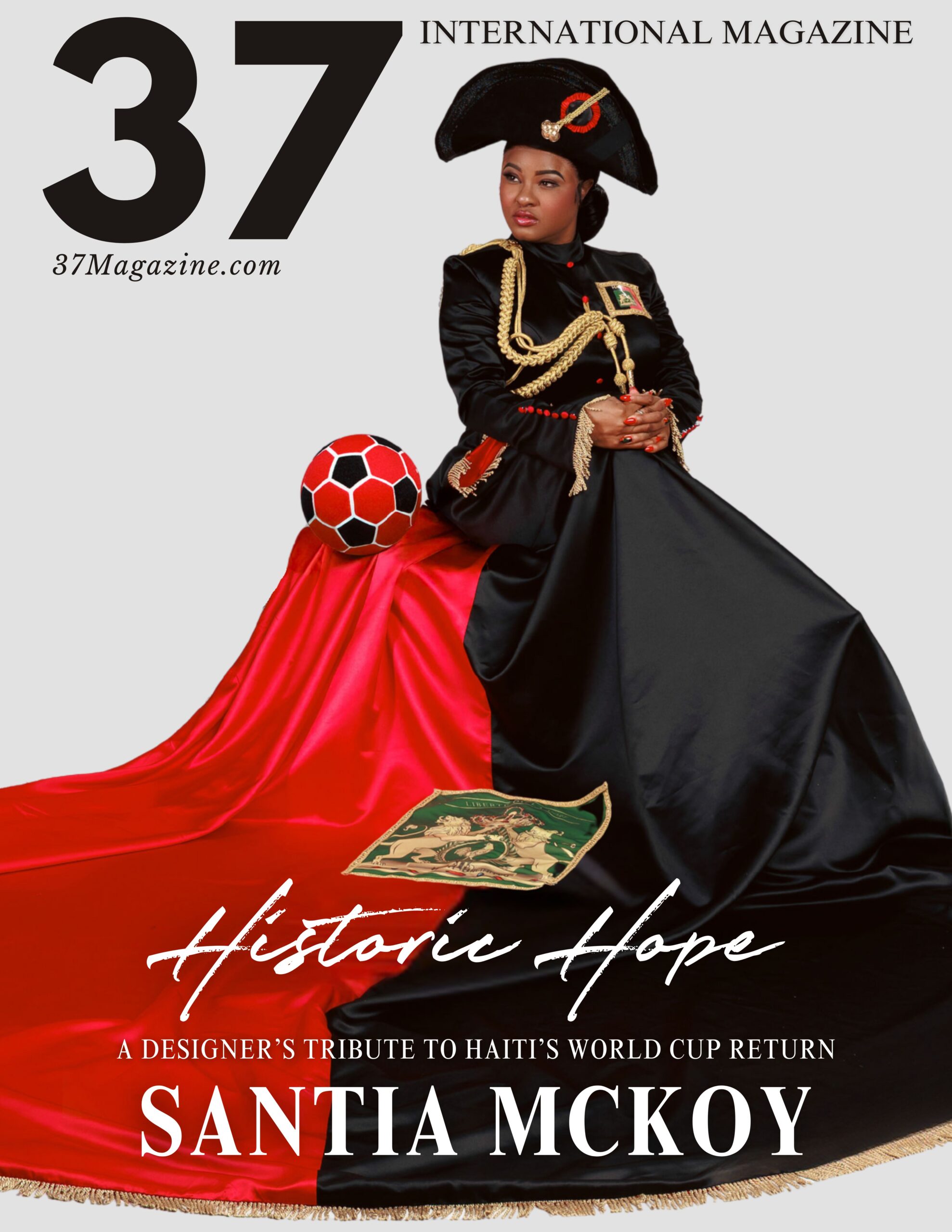
A Touchstone of Haitian Independence
From the thunder of cannons at Vertières to the roar of a football crowd, history resurfaced—linking the defiance of revolutionary soldiers to the determined strides of modern-day Grenadiers. What unfolded on the field was not merely a sporting achievement, but a moment of profound national symbolism. This was not merely a victory, but an expression of identity and spirit.
On November 18, 2025, Haiti did more than qualify for the FIFA World Cup.
It reclaimed a date etched into its national soul.
For Haitians everywhere, on the island and throughout the diaspora, this date resonates deeply. November 18 marks the Battle of Vertières, the final decisive confrontation of the Haitian Revolution. It was there, in 1803, that formerly enslaved men defeated Napoleon’s army, sealing the path to independence declared on January 1, 1804. Vertières was not just a battle; it was the world’s first unequivocal declaration that Black freedom was not a request, but a destiny.
More than two centuries later, on that same sacred date, The Grenadiers fought their own battle, not with muskets and sabers, but with discipline, teamwork, belief. and a football They fought not for land, but for honor. Not for survival, but for representation. And in doing so, Haiti’s national football team reminded the world that the Haitian spirit has never been extinguished.
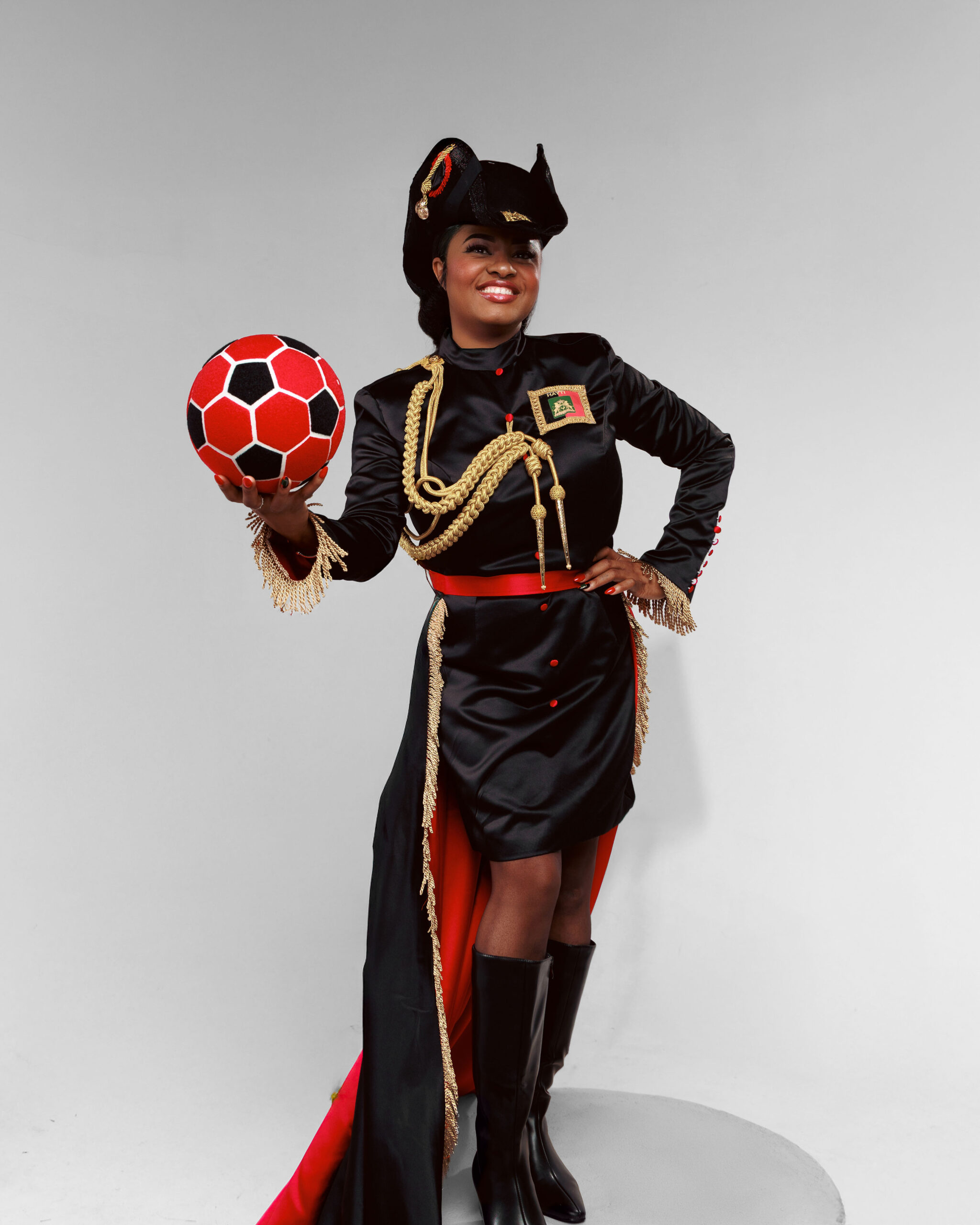
Threads of Triumph, Stitched in Pride
Born into a rich heritage of Haitian culture and creativity, Santia Mckoy has long navigated the intersection of art, identity, and resilience. Now based in Orlando, Florida, her designs are rooted in the diasporic experience; transforming her cultural symbolism from fabric into style through her fashion house S&M Custom Design. In her work, tradition and innovation merge, reflecting not just aesthetic vision but a deeper commitment to cultural representation and empowerment.
“My work carries Haiti with me, not as a backdrop, but as the foundation. Each design is a story, a tribute, and a promise.”
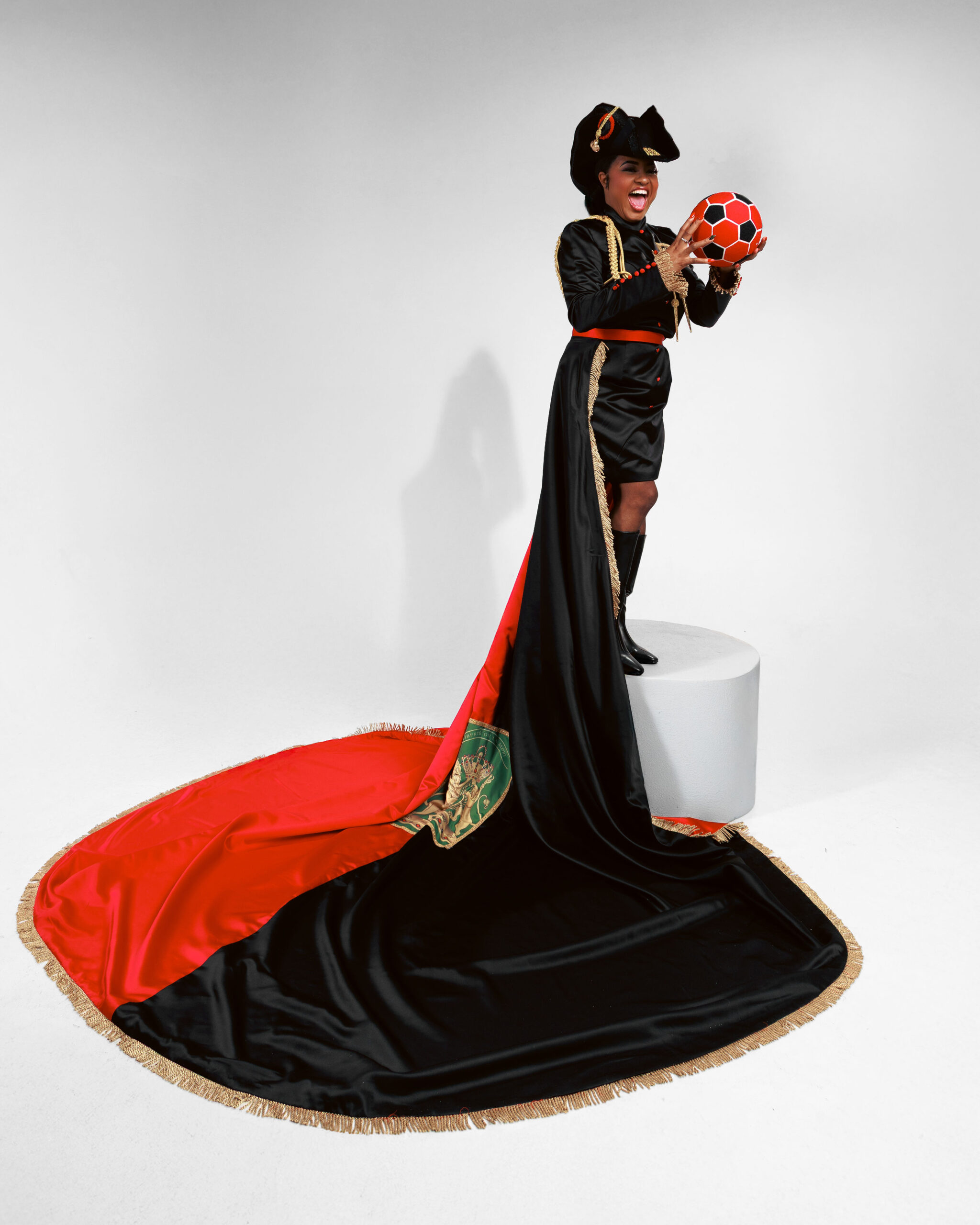
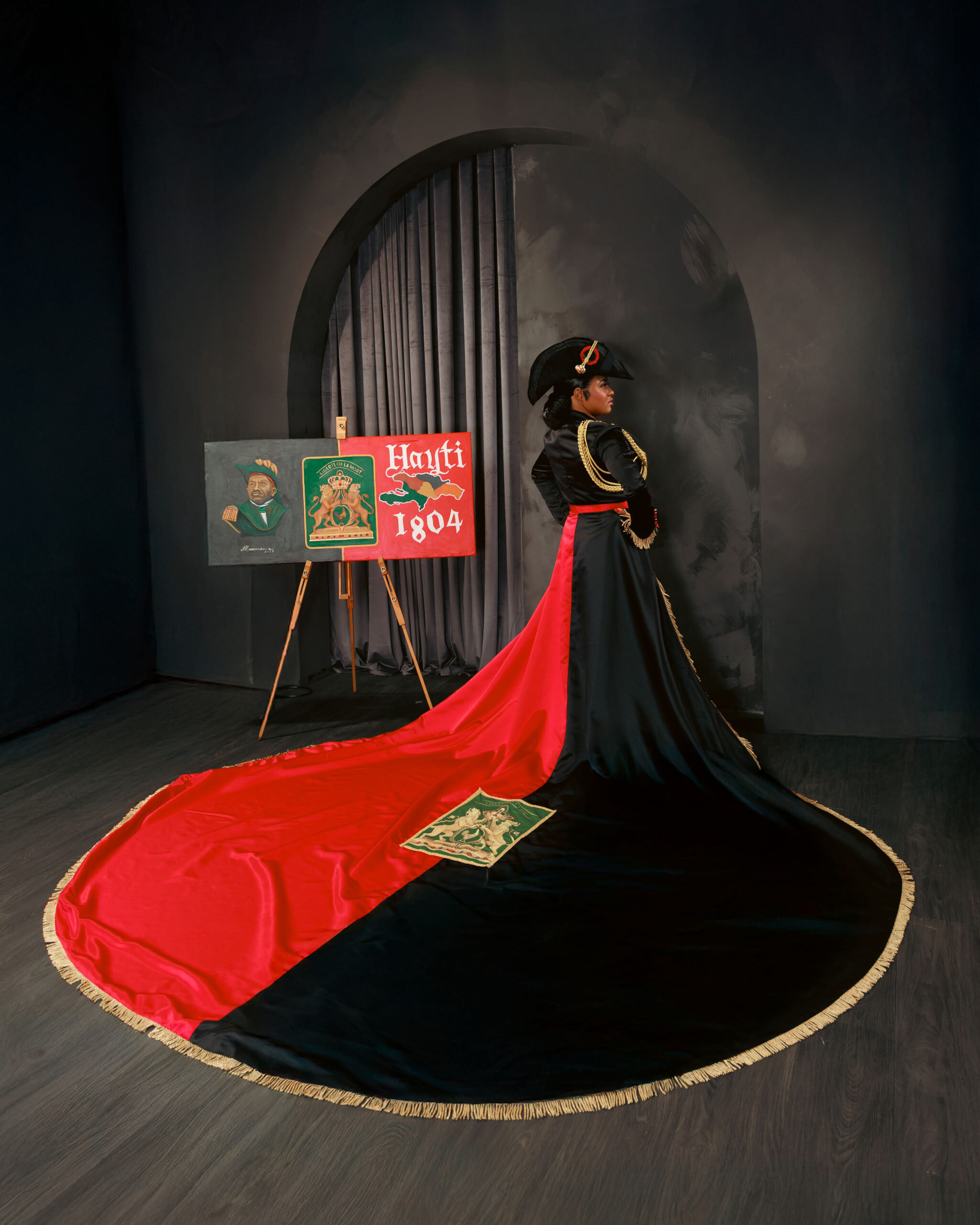
In many ways, Santia embodies a modern-day Catherine Flon, translating national pride into material form. Just as she stitched the first Haitian flag as an act of resistance and unity, Santia uses fabric, color, and design to tell Haiti’s story in the present day. Her fashion bridges her homeland with the world, transforming history into contemporary expression. Each creation is not merely worn, but carried. A visual affirmation of legacy, perseverance, and belonging.
As a Haitian designer living in Orlando, Santia carries Haiti with her in everything she creates. Distance does not dilute identity; it sharpens it. When you live away from home, your culture becomes something you protect fiercely, something you translate into art, fabric, and form. “Being Haitian is not something I put on and take off. It lives in my work, in my hands, and in every design choice I make. Distance from Haiti hasn’t weakened my connection, it has deepened it. Design became my way of staying rooted.”
From the Battlefield to the World Stage
Haiti’s history is heavy, complex, and often misunderstood. It is a history of triumph challenged, of courage met with isolation, of resilience tested time and again by political instability, economic hardship, natural disasters, and systemic injustice. Yet, through it all, Haiti endures.
Football, like art, has always been one of the few spaces where Haitians can collectively breathe, dream, and celebrate without apology. When the Grenadiers step onto the field, they carry more than tactical formations and athletic ambition. They carry a nation’s scars and a nation’s hopes. They carry Vertières in their bones.
To qualify for the 2026 FIFA World Cup on November 18 is to reclaim narrative power. It is to say: We are still here. It is to affirm that Haiti’s story is not frozen in tragedy, but alive with movement, excellence, and aspiration.
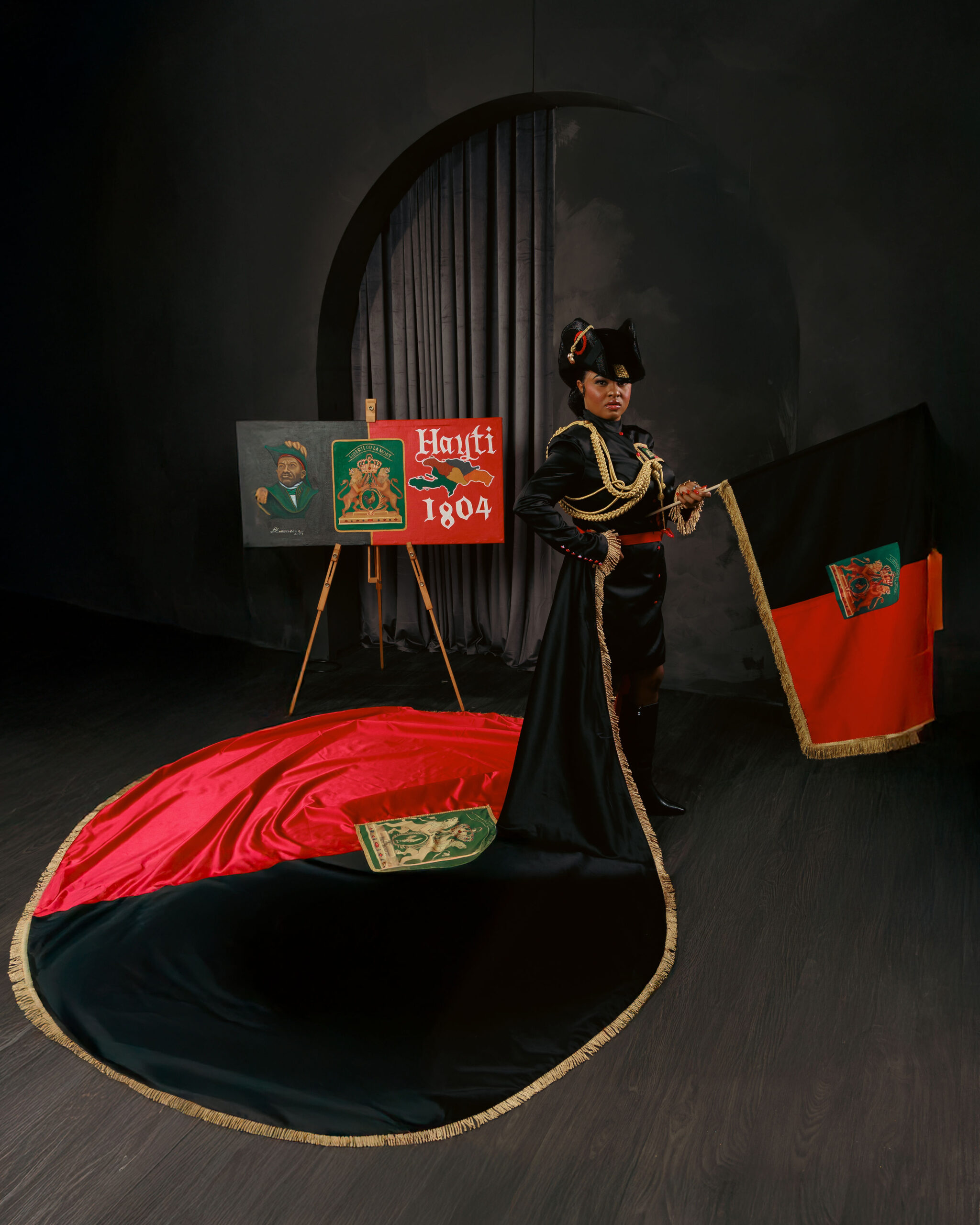
The Grenadiers’ qualification ignited something deeper than excitement. It rekindled national unity at a time when unity feels fragile. For a fleeting but meaningful moment, political differences and borders dissolved. Haitians found themselves united; not by crisis, but by pride. Streets filled with celebration, flags waved across borders, and a long-silenced football legacy was finally reclaimed.
Haiti’s qualification for the 2026 FIFA World Cup marked a profound moment in sporting history, a return to the world’s grandest football stage for the first time in fifty-two years, since their lone appearance at the 1974 tournament in West Germany. This long-awaited achievement was sealed with a 2–0 victory over Nicaragua. Despite ongoing challenges, including a lack of safe home venues due to insecurity that forced Haiti to play qualifiers abroad, the Grenadiers rose to the top of their Confederation of North, Central America and Caribbean Association Football (CONCACAF) group. Their eventual World Cup berth stands as a symbol of hope and resilience that transcends sport.
A Living Motto
Unity Makes Strength.
L’Union Fait La Force.
“These words are etched into the Haitian flag, but more importantly, they are etched into our survival. They guided our ancestors through revolution, and they continue to guide us today. Football, by its very nature, embodies this motto. No single player can win alone. Victory comes only when individual talent submits to collective purpose.”
The Grenadiers’ journey to World Cup qualification was not perfect or easy. It required sacrifice, discipline, and faith. Belief in teammates, in coaching, and in a dream that many thought unrealistic. But Haitians have always been experts in believing beyond reason. After all, their nation itself was once considered impossible.
“This is why the Grenadiers’ success feels personal. Their victory is not detached from our daily struggles; it rises directly from them. In their resilience, we recognize our own. In their discipline, we see what Haiti can become when unity triumphs over division.”
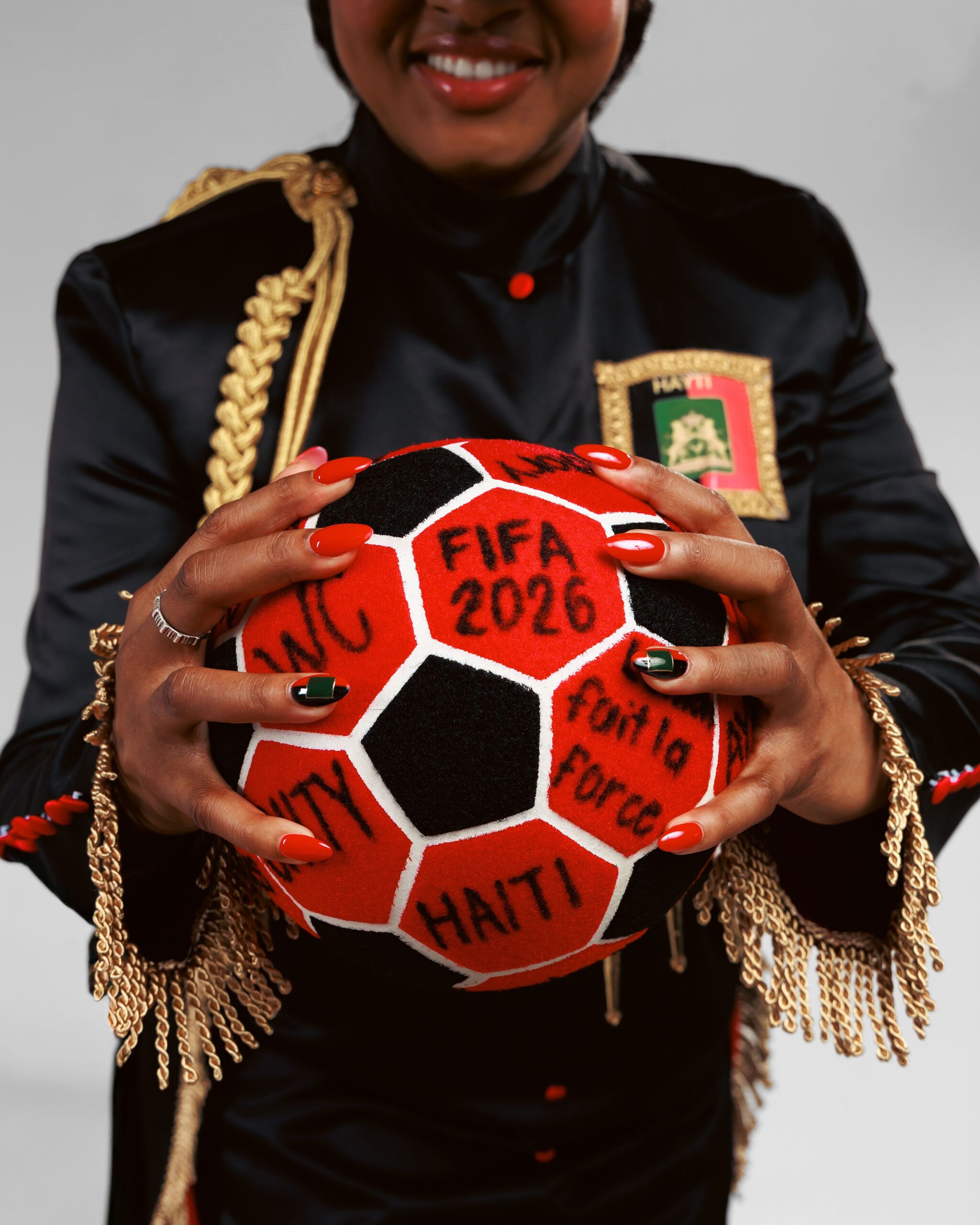
Fashion & Design as Resistance
It is within this historical moment that Santia conceived a symbolic design as a tribute to Haiti’s Grenadiers and to the nation itself. The creation is not merely a garment; it is a statement. A prayer. A continuation of the Haitian narrative expressed through visual language.
For Santia, fashion is never decoration; it is storytelling. It is the medium through which her heritage moves forward. The proposed team uniform concept by S&M Custom Design is deeply rooted in Haitian symbolism. Every line, color, and pattern was chosen with intention. The bold red foundation represents courage, sacrifice, and the blood shed at Vertières—the blood that made independence possible. Red is not aggressive; it is alive. It is the heartbeat of a nation that refuses to surrender.
The rich blue vertical striping symbolizes endurance and forward motion. Blue is the color of depth, of oceans crossed by Santia’s ancestors, of skies under which the athletes now perform. The verticality of the stripes reflects upward movement, aspiration, and growth. It speaks to Haiti’s refusal to remain static. Across the chest, a white band bears the name “Haiti” in a modern athletic typeface. White is clarity, hope, and renewal. It is the pause between struggle and triumph. “Placing Haiti’s name boldly at the center is an act of affirmation: we do not hide who we are.”
The Haitian flag placed on each sleeve is deliberate and proud. It ensures that every movement, every sprint, every goal, every celebration, carries the flag into global visibility. The back of the uniform mirrors the front, reinforcing balance and cohesion, while stylized player names and impactful numbering honor individuality within unity. The shorts incorporate geometric blue patterns inspired by Haitian art and architecture. Subtle nods to ironwork, murals, and ancestral design traditions that have survived despite neglect and erasure. These patterns remind us that Haiti’s creativity has always flourished, even in the harshest conditions.
“This uniform is not just about football. It’s about visibility, respect, and reminding the world who Haitians are.”
Representation Beyond the Game
The World Cup is more than a tournament. It is one of the few truly global stages where nations are seen simultaneously by billions. For Haiti, participation is not just about football. It is about visibility, dignity, and reclaiming narrative space.
Too often, Haiti appears in international media only through the lens of crisis. Rarely do cameras linger on their excellence, artistry, or joy. The Grenadiers’ presence at the World Cup disrupts this pattern. It forces the world to see Haitians not as perpetual victims, but as competitors, creators, and contributors.
Uniforms matter in this context. They are visual ambassadors. They speak before a single word is said. A thoughtfully designed uniform tells the world that Haiti takes itself seriously, that they honor their past while stepping confidently into the future.
S&M Custom Design’s team uniform proposal is rooted in advocacy as much as aesthetics. It is an assertion that Haitian design deserves a place on the global stage, just as Haitian athletes do. “It is proof that our creativity, like our courage, has never been lacking, only overlooked.”
A Torch Passed Forward
The courage of the Grenadiers inspires more than young athletes; it inspires artists, designers, students, and dreamers. It inspires those who wake up each day determined to build something beautiful despite uncertainty. It inspires a generation that refuses to inherit despair.
“To our Grenadiers: you have carried the Haitian torch with honor. You have reminded us that joy is still possible, that unity is still achievable, and that Haiti’s name can still be spoken with admiration on the world stage.”
As the World Cup approaches, perfection is not the measure—heart is. Every stride toward the finals matters, but even more powerful is the knowledge that the Grenadiers carry the weight of history with them. They carry Vertières. They carry 1804. They carry the spirit of every Haitian who has ever dared to believe in tomorrow.
Haiti is more than its struggles.
Haiti is more than its wounds.
Haiti is spirit.
Haiti is flight.
Haiti is forever.
L’Union Fait La Force.
To view Santia McKoy’s full fashion collection, visit SMCustomDesign.com
- Photography: Paul Darius
- Hair: Sasha Mercier
- Make-Up: Aliya McKoy
- Shoot Sponsor: Adrian McKoy
- Painting: Ronald Desruisseaux